 David Garcia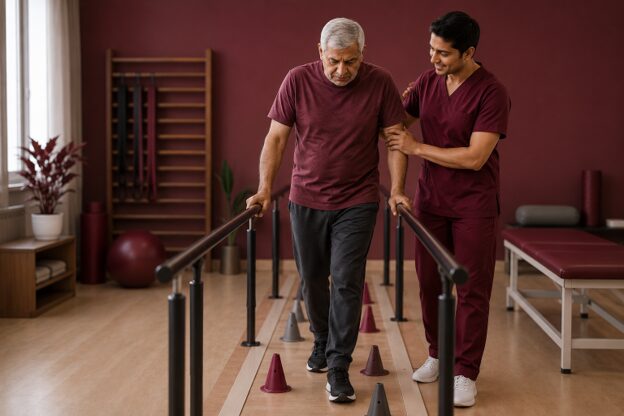
A stroke can affect how a person moves, sits, stands, and uses their arms and legs. When movement remains limited for an extended period, muscles and joints may gradually become harder to move. In some cases, this can progress to a contracture after stroke, where a joint becomes permanently or persistently restricted in its available range of movement.
Contractures can interfere with dressing, bathing, walking, hand use, transfers, and other everyday activities. They may also make rehabilitation more challenging.
The good news is that early attention to positioning, movement, and rehabilitation can help reduce the risk. Understanding why contractures develop is an important part of long-term stroke care.
What Is a Contracture After Stroke?
A contracture is a persistent limitation in joint movement that occurs when muscles, tendons, connective tissues, or other structures around a joint become shortened or less flexible.
For example, after a stroke, a person may gradually have difficulty:
- Straightening the elbow
- Opening the fingers
- Moving the wrist
- Straightening the knee
- Bringing the ankle into a normal position
- Moving the hip through its available range
A contracture is different from simply feeling stiff for a short period. It represents a more lasting restriction in movement.
Why Do Contractures Develop After a Stroke?
Contractures after stroke usually develop because several factors can occur together.
Reduced Movement
When a person has significant weakness or paralysis, the affected limb may not move through its normal range during the day.
A joint that spends long periods in one position can gradually lose flexibility.
Increased Muscle Tone
Some stroke survivors develop spasticity or increased muscle tone. Certain muscles may become overactive and remain partially contracted.
For example, the elbow may tend to stay bent, while the wrist and fingers may remain flexed.
Poor Positioning
How an affected limb is positioned during rest can influence its movement over time.
If the arm, hand, leg, or ankle consistently remains in a shortened position, maintaining normal joint mobility can become more difficult.
Pain
Pain can cause a person to avoid using a particular joint. Less movement may then contribute to further stiffness.
Prolonged Bed Rest
People with more severe strokes may spend considerable time in bed or sitting. Without an appropriate mobility programme, prolonged inactivity can contribute to loss of joint movement.
Muscle Contracture After Stroke vs Joint Stiffness
The terms are sometimes used interchangeably, but they are not exactly the same.
Joint stiffness after stroke can refer to difficulty moving a joint that may improve with appropriate movement or therapy.
A muscle contracture after stroke involves a more persistent shortening or tightening of tissues that restricts the available range of motion.
There can also be other reasons for restricted movement, including spasticity, pain, weakness, joint problems, or changes in soft tissues.
Because the underlying cause matters, persistent stiffness should be assessed rather than automatically labelled as a contracture.
Which Parts of the Body Are Commonly Affected?
Contractures can develop in different joints depending on the person’s movement pattern and positioning.
Shoulder and Arm
A stroke survivor may have difficulty moving the shoulder normally. Poor arm positioning combined with weakness or increased muscle tone can affect shoulder movement.
Elbow
The elbow may gradually spend more time in a bent position, particularly when muscle tone increases.
Wrist and Fingers
The wrist and fingers can become difficult to straighten. This can interfere with:
- Hand hygiene
- Dressing
- Eating
- Grooming
- Holding objects
Hip and Knee
Reduced walking and prolonged sitting or lying can affect movement around the hip and knee.
Ankle
Ankle positioning is particularly important for people who have difficulty walking. Changes in muscle tone can cause the foot to point downward, making it harder to place the foot properly during standing and walking.
How Can Contractures Affect Daily Life?
A contracture can turn a movement that was already difficult into one that becomes even more restricted.
For example, limited knee movement can make standing and walking harder. Restricted finger movement can interfere with holding a cup or putting on clothes.
Possible consequences include:
- Difficulty walking
- Trouble maintaining a standing position
- Increased dependence during transfers
- Difficulty dressing
- Problems with personal hygiene
- Reduced ability to use the affected hand
- Difficulty positioning the limb comfortably
- Increased caregiver assistance
Stroke rehabilitation for mobility is important. As it helps in
Preventing Contractures: What Can Help?
Preventing contractures begins with maintaining safe movement and avoiding unnecessary periods of immobility.
1. Start Appropriate Rehabilitation Early
Once the person is medically stable, the rehabilitation team can determine what movements and activities are safe.
Early rehabilitation may focus on positioning, assisted movement, transfers, sitting balance, standing, and functional activities according to the person’s abilities.
2. Maintain Joint Movement
Regular movement through an appropriate range can help maintain flexibility.
The type and amount of movement should be based on the person’s condition rather than using the same exercises for every stroke survivor.
3. Pay Attention to Positioning
The affected limb should be positioned comfortably and safely during rest and activity.
Therapists can teach caregivers how to position the arm, hand, leg, and foot to support comfort and functional movement.
4. Avoid Long Periods in One Position
If medically appropriate, changing positions and incorporating movement into the day can help reduce the effects of prolonged inactivity.
Even when someone cannot walk independently, they may be able to participate in assisted movements or other activities recommended by their rehabilitation team.
5. Address Spasticity
Increased muscle tone can contribute to restricted movement.
A rehabilitation doctor or other appropriate healthcare professional can assess spasticity and determine whether therapy, positioning strategies, medication, injections, splinting, or other interventions may be appropriate.
Range of Motion Exercises After Stroke
Range of motion exercises are commonly included in stroke rehabilitation when appropriate.
They are designed to move a joint through some or all of its available movement.
Depending on the person’s abilities, these may be:
- Active: The person moves the joint independently.
- Active-assisted: The person performs the movement with some assistance.
- Passive: Another person moves the limb because the person cannot move it adequately themselves.
The correct method depends on strength, joint stability, muscle tone, pain, and other factors.
Why Technique Matters
Range of motion exercises should be performed gently and with appropriate control.
Caregivers should not force a joint beyond its comfortable range. Fast, forceful movements can cause pain or injury, particularly when the affected limb has reduced sensation or poor joint control.
A physiotherapist can demonstrate the correct technique and explain how frequently exercises should be performed.
Can Physiotherapy Prevent Contractures?
Stroke physiotherapy can play an important role in maintaining mobility and reducing complications associated with inactivity.
A physiotherapist may work on:
- Joint mobility
- Muscle flexibility
- Strength
- Posture
- Balance
- Transfers
- Standing
- Walking
- Functional movement
- Positioning education for caregivers
The goal is not simply to stretch a limb. Rehabilitation aims to help the person use the limb as effectively and safely as possible.
What If a Contracture Has Already Developed?
A contracture does not necessarily mean that rehabilitation should stop.
The first step is understanding how much of the movement restriction is caused by fixed tissue changes and how much may be related to weakness, pain, spasticity, or other factors.
Treatment may include:
- Individualised range-of-motion work
- Positioning
- Functional movement
- Stretching when appropriate
- Strengthening of suitable muscle groups
- Splinting or orthotic support in selected cases
- Management of spasticity
- Task-specific rehabilitation
In more advanced cases, a medical specialist may recommend additional interventions.
Can Splints Help Prevent Contractures?
Splints or orthoses are sometimes used to help maintain a particular joint position. However, they are not automatically required for every stroke survivor.
Whether a splint is appropriate depends on:
- Joint position
- Muscle tone
- Skin condition
- Sensation
- Existing stiffness
- Functional goals
- Ability to tolerate the device
A poorly fitted splint can create pressure, discomfort, or skin problems. It should therefore be recommended and monitored by an appropriate healthcare professional.
What Should Caregivers Avoid?
Families often try to help by stretching the affected limb themselves. However, more force is not necessarily better.
Avoid:
- Forcefully straightening a stiff joint
- Pulling the affected arm during transfers
- Repeatedly pushing through pain
- Holding a limb in an uncomfortable position for long periods
- Starting splinting without professional assessment
- Assuming all stiffness is a contracture
- Ignoring a sudden change in joint movement
If movement suddenly becomes more restricted, particularly with pain, swelling, redness, or injury, the person should be assessed.
Signs That a Rehabilitation Review May Be Needed
A review may be useful when:
- A previously movable joint is becoming increasingly stiff
- The fingers are becoming harder to open
- The elbow remains bent more frequently
- The ankle position is changing
- Dressing or hygiene is becoming difficult
- Walking ability is declining because of restricted movement
- Pain is developing during movement
- The caregiver is finding positioning increasingly difficult
Early identification can allow the rehabilitation team to modify the treatment programme before the restriction becomes more difficult to manage.
How Antara Supports Stroke Rehabilitation
Preventing contractures is usually part of a broader rehabilitation programme rather than a separate treatment.
At Antara Care Homes, stroke rehabilitation can involve doctors, nurses, physiotherapists, occupational therapists, speech therapists, and personal health assistants. Depending on individual requirements, the programme may include daily physiotherapy, mobility and gait training, occupational therapy, speech and swallowing therapy, medication management, nutrition support, and clinical monitoring.
Therapy can include appropriate movement and positioning strategies to help maintain functional mobility while addressing the person’s specific limitations.
For individuals who require structured gait and lower-limb rehabilitation, advanced robotic rehabilitation equipment such as ExoAtlet may also be considered when clinically appropriate.
The emphasis is on creating an environment where rehabilitation, clinical care, daily activities, and caregiver support can continue consistently following hospital discharge.
Conclusion
Contractures after stroke can develop when weakness, reduced movement, increased muscle tone, pain, and prolonged positioning gradually restrict joint mobility. Once established, they can make everyday activities and rehabilitation more difficult.
The best approach is to pay attention to movement from the early stages of recovery. Appropriate positioning, range of motion exercises, functional activity, mobility training, and professional stroke physiotherapy can all have a role.
Most importantly, rehabilitation should be individualised. A stiff joint should not simply be forced into movement, and a change in mobility should not automatically be assumed to be a contracture. Regular assessment helps identify the underlying problem and determine the safest way forward.