
 David Garcia
With constant notifications, work responsibilities, and everyday distractions, keeping your attention on one thing can sometimes feel difficult. Your thoughts may move from one task to another, making it harder to concentrate or take a proper break.
Breath counting is a simple mindfulness exercise that uses your natural breathing pattern as a point of focus. It does not require special equipment, a meditation space, or previous experience. You simply pay attention to your breathing and count each breath.
This technique can be practised for a few minutes at home, during a work break, or whenever you want to step away from distractions. With regular practice, it can help you become more aware of your attention and notice when your mind begins to wander.
What Is Breath Counting?
Breath counting is a meditation technique in which you mentally count your breaths while observing their natural rhythm.
The exercise gives your attention a simple task. Instead of trying to stop your thoughts, you focus on breathing and use counting to gently bring your attention back whenever it wanders.
A basic counting pattern looks like this:
- Breathe in naturally.
- Breathe out naturally.
- Count one.
- Repeat the process and count two.
- Continue until you reach five or ten.
- Start again from one.
You do not need to breathe deeply or follow a particular speed. The purpose is to notice your breathing rather than control it.
Why Counting Breaths Can Help Improve Focus
Breath counting combines two simple activities: observing a physical sensation and keeping track of a number.
This gives your mind a clear point of attention. Whenever you become distracted, you can recognise it and return to the exercise.
Some potential benefits include:
Encourages present-moment awareness: Paying attention to each breath helps you notice what is happening instead of automatically following unrelated thoughts.
Develops attention control: Returning to the count after distractions gives you an opportunity to practise redirecting your attention.
Creates a short mental break: A few minutes of focused breathing can provide a pause between demanding activities.
Builds self-awareness: You may become more familiar with the thoughts and distractions that commonly interrupt your concentration.
Supports relaxation: A gentle breathing practice may feel calming, especially when combined with a comfortable position and a quiet environment.
These experiences vary between individuals. Breath counting is a simple wellness exercise, not a guaranteed treatment for concentration difficulties or anxiety.
How To Practise Breath Counting Step By Step
You can learn the technique without following a complicated meditation routine. Begin with a short session and gradually increase the duration if you feel comfortable.
Step 1: Find A Comfortable Position
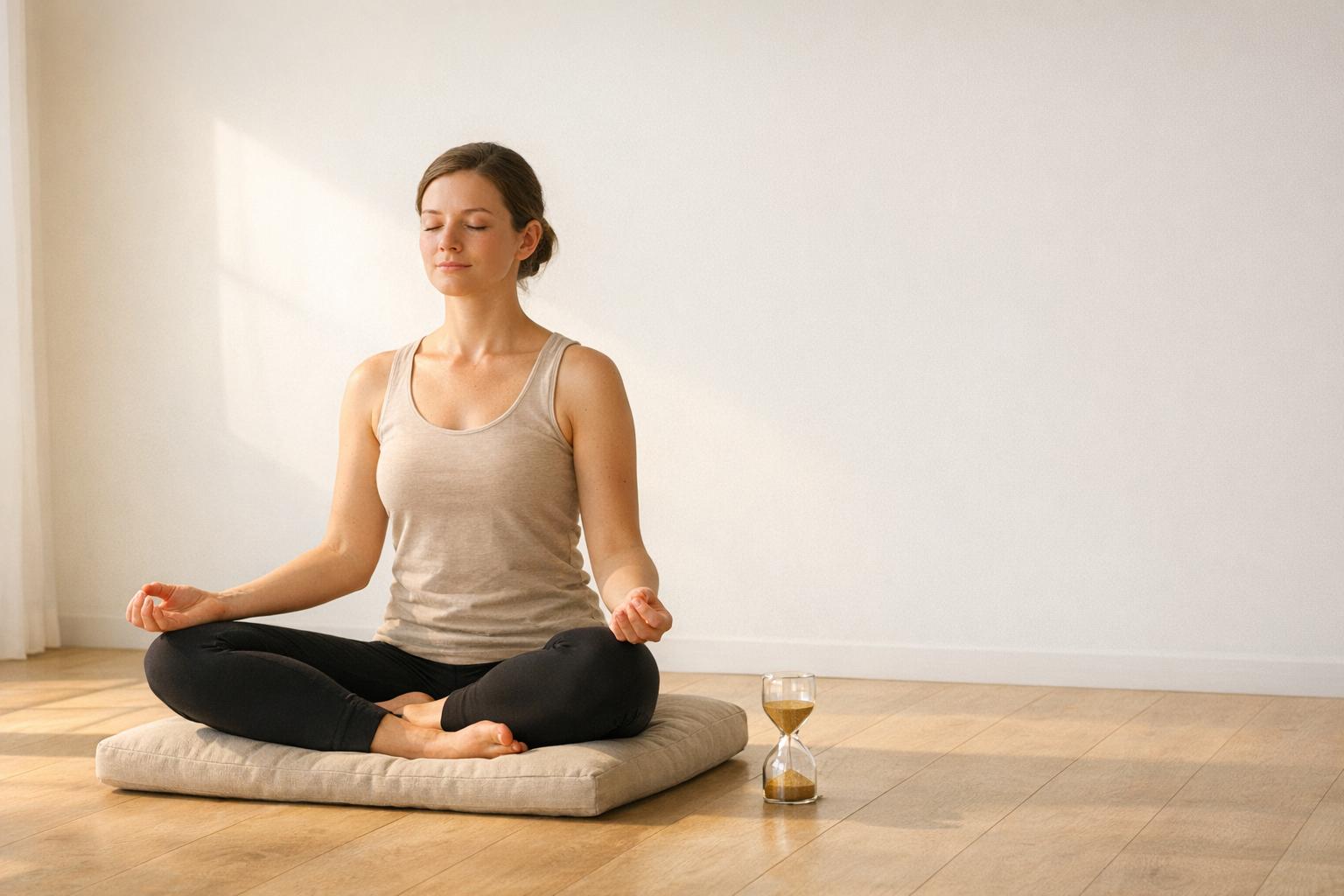
Sit on a chair, cushion, or another stable surface. Keep your back naturally upright and allow your shoulders to relax.
You can also practise while lying down if sitting is uncomfortable. Choose a position that allows you to breathe comfortably.
Step 2: Notice Your Natural Breathing
Before counting, spend a few moments observing your breathing.
Notice how your chest or abdomen moves as you breathe in and out. Avoid forcing a deeper breath or trying to change your breathing speed.
Step 3: Begin Counting
Start counting after each complete breathing cycle.
For example:
- Inhale and exhale naturally — count one.
- Inhale and exhale naturally — count two.
- Continue until you reach five.
- Return to one and repeat.
You can use ten as your upper limit if that feels comfortable. Keeping the counting range short makes it easier to notice when your attention wanders.
Step 4: Gently Return When Distracted
Your mind will probably wander at some point. You may start thinking about work, upcoming plans, or something that happened earlier.
This is normal. When you notice that you have lost track, simply return to one without criticising yourself.
Recognising distraction and returning to the exercise is an important part of the practice.
Step 5: Finish Slowly
After a few minutes, stop counting and notice your surroundings. Observe how your body feels and allow yourself a moment before returning to other activities.
There is no need to evaluate whether you performed the exercise perfectly.
Three Breath Counting Techniques To Explore
Once you understand the basic method, you can experiment with different variations.
1. Five-Breath Counting
This is a suitable starting point for beginners.
Count from one to five, using one number for each complete breathing cycle. Once you reach five, begin again.
It is particularly useful when you have only a few minutes available.
2. Ten-Breath Counting
If you are comfortable with the basic method, extend the counting range to ten.
This gives you a slightly longer sequence to follow. If you lose track, restart from one instead of trying to remember where you stopped.
3. Visual Breath Counting
Some people find it easier to combine counting with a simple mental image.
Imagine each number appearing gently as you complete a breathing cycle. Once you reach five, picture the sequence starting again.
Keep the image simple so that it supports your attention rather than becoming another distraction.
How To Combine Breath Counting With Deep Breathing
Breath counting and Deep Breathing are related but different practices.
Breath counting involves observing and counting natural breathing cycles. Deep breathing generally involves intentionally changing the depth of your breaths.
You can combine the two carefully if it feels comfortable:
- Sit in a relaxed position.
- Breathe gently without forcing the air in or out.
- Notice the movement of your abdomen.
- Count each complete breathing cycle.
- Return to natural breathing if you feel uncomfortable.
Avoid taking repeated exaggerated breaths. If you experience dizziness, breathlessness, or discomfort, stop the exercise and breathe normally.
For most beginners, simply counting natural breaths is enough.
A Five-Minute Routine For Everyday Practice
You do not need a long meditation session to explore breath counting. Try this simple routine:
| Stage | Activity | Duration |
| Preparation | Sit comfortably and relax your shoulders | 1 minute |
| Observation | Notice your natural breathing | 1 minute |
| Counting | Count from one to five repeatedly | 2 minutes |
| Closing | Stop counting and observe your surroundings | 1 minute |
You can practise this routine in the morning, between work tasks, or before bedtime.
If five minutes feels too long initially, start with one or two minutes.
Common Mistakes To Avoid
Breath counting is simple, but beginners sometimes make the exercise more complicated than necessary.
Trying to control every breath: Allow breathing to happen naturally instead of forcing a particular rhythm.
Getting frustrated after losing count: Distractions are expected. Restart from one and continue.
Counting too quickly: Give yourself enough time to notice each complete breathing cycle.
Expecting immediate results: Concentration develops through practice. Avoid judging your progress after a single session.
Practising in an uncomfortable position: Adjust your seating or stop if you experience physical discomfort.
Using Breath Counting When Everyday Pressure Builds
When responsibilities accumulate, it can be difficult to give your attention to one task at a time. A short breathing exercise can create an opportunity to pause before moving on to the next activity.
For example, you might practise breath counting after completing a demanding meeting or before beginning an important assignment.
If you notice Stress building up, take a comfortable position and count a few natural breathing cycles. This may help you step back from the immediate situation and become more aware of your response.
However, breath counting is not a substitute for professional support when stress becomes persistent or significantly affects everyday life.
Conclusion
Breath counting is an accessible exercise for anyone who wants to practise mindfulness and develop greater awareness of their attention. By observing natural breathing and counting each complete cycle, you give your mind a simple activity to return to whenever distractions appear.
Start with five breaths, practise for a few minutes, and avoid expecting perfection. The aim is not to prevent thoughts from appearing but to notice when your attention wanders and gently bring it back.
FAQs
1. How many breaths should I count during meditation?
Beginners can start by counting from one to five. Once comfortable, they can extend the sequence to ten before restarting.
2. Is breath counting suitable for beginners?
Yes. It is a simple mindfulness exercise that does not require previous meditation experience or special equipment.
3. Should I breathe deeply while counting?
No. You can count your natural breathing cycles without changing their speed or depth. Forced breathing is unnecessary.
4. How long should I practise breath counting?
Start with two to five minutes. You can gradually increase the duration according to your comfort and available time.
5. What should I do if I lose count?
Simply return to one and continue. Losing count is normal and gives you another opportunity to practise bringing your attention back to the present moment.